(It is an honor to post a piece by Dr. Ben Mijuskovic in response to the first chapter of Lennon and Stainton’s work. Any comments or remarks will be directed to his attention for response.)


The first article in the study, authored by Professor Karen Margrethe Nielsen, titled “Did Plato Articulate the Achilles Argument?” asks “whether the Achilles can be found in Plato’s Phaedo, or anywhere else in the Platonic corpus” [ARP, 22]. As I understand Professor Nielsen’s position, she believes that Plotinus is the original source and in confirmation she refers to Moses Mendelssohn’s dialogue of the same name in support pointing out that if indeed Plato was the first source, then surely Mendelssohn would have cited Plato instead of drawing heavily on Plotinus and his arguments.


lies at the bottom of all the familiar arguments of later metaphysicians who deduce the immortality of the soul from its alleged character as a ‘simple’ substance,’ the ‘paralogism’ attacked by Kant in the Critique of Pure Reason . . . Socrates point is not that the soul is a ‘simple substance,’—he had not so much the language in which to say such a thing—but that it is, as the Orphic religion had taught, something divine. Its ‘deiformity,’ not its indivisibility is what he is anxious to establish; the indivisibility is a mere consequence. [ARA, p. 6]
Taylor himself remarks that Kant’s knowledge of the proof derives from Christian Wolff and Moses Mendelssohn [ARA, p. 6]. Perhaps. The first edition second paralogism treats the unity of consciousness but the second edition paralogism primarily deals with immortality.
By contrast, I also state that F. M. Cornford contends that Plato proves the soul to be simple because: “As immortal and imperishable, the soul is most like the divine, immortal, intelligible, simple, and indissoluble (because incomposite); whereas the body is most like the mortal, multiform, unintelligible, dissoluble (because composite) and perpetually changing” [ARA, pp. 6-7]. So I do consider the controversy over the attribution to Plato of the Broad Achilles. To suggest otherwise is somewhat misleading. Thus, I would say that it is a bit strong to say that, “Ben Mijuskovic nevertheless identifies Plato’s Phaedo as its first locus” [ARP, pp. 23 and 24]. In fact, my opening statement reads: “The argument seems to be first suggested as a proof for immortality in Plato’s Phaedo” [ARA p. 6].
At bottom, her conclusion is that “there is little evidence to suggest that Plato expressed either the Narrow or Broad Achilles.” [pp.25-26]
Professor Nielsen’s champion for a first source is Plotinus, via Mendelssohn no less, intimating that since Mendelssohn cites Plotinus rather than Plato it must be the former who is the authentic originator. [ARP, p.23] But she neglects to mention that I discuss Plotinus at greater length than I do Plato and that I explicitly attribute to the great Neoplatonist not only credit for both the Narrow and the Broad Achilles’ (unity and immortality) but, in addition, I also even credit Plotinus for the Broadest Achilles, which consists of an argument for continuous personal identity based on the simplicity of the soul [ARA pp. 8-10].
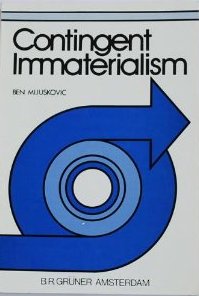
But, beyond that and more importantly. Professor Nielsen indicates that my infatuation with A. O. Lovejoy’s commitment to unit-ideas, exemplified in his classic The Great Chain of Being, leads me to operate with a rather “eccentric and confused conception” of the Achilles. I think that’s a fair criticism to which I would like to respond in the following manner. The unit-idea is not the Achilles argument as a whole. The unit-idea is the premise. The assumption is that the soul, along with its predicates, accidents, attributes, or properties are all simple, immaterial, unextended (just like Kant’s verse and its constituent words). (Although, by the way, Henry More, believed the soul to be both immaterial and extended.) As I have tried to correct – and argue – in subsequent publications, the simplicity premise has been used for no less than seven different conclusions: immortality; unity; personal identity; epistemological and metaphysical idealism; immanent time-consciousness; the freedom of self-consciousness; and the immaterial nature of meanings and relations. The Achilles of Rationalist Arguments was published in 1974. Since then there have been some twenty or so articles and reprints dedicated to “my” Achilles, the last one appearing in 2009, and I have tried to correct the confusion between the Achilles as a premise and as an argument. Actually, soon after the publication of my book, I rechristened the study calling it the Simplicity Argument.
Possibly, ARP appears to commit a similar “eccentricity and confusion” by assuming “Premise 2: Only a simple, unified substance can unify representations”; therefore the soul is (1) immortal (Broad Achilles) and (2) a unity (Narrow Achilles).
Let me also say this. Whether or not even the Broad Achilles can be attributed to Plato, it’s clearly the case that the second argument in the Phaedo is not considered by Plato as the strongest proof. Rather, Plato thinks that the strongest demonstration for an afterlife relies on the eternal synthetic a priori relation between the Forms of Life and Soul, which is modeled on an analogous connection established in the Meno between color and extension/shape [see Mijuskovic, “The Synthetic A Priori in Plato,” Dialogue, May, 1970]. But, of course, Plato invokes various arguments for immortality in different dialogues.
Also, I might suggest that in my mind there is a strong connection between Plato’s definition of the activity of thought, described as the soul’s internal dialogue with itself, and the ubiquitous reflexive, self-conscious paradigm of awareness that fuels the unity of consciousness claim, a model that is shared by Plato, Aristotle—see especially Aristotle’s characterization of the Unmoved Mover in the Metaphysics–Descartes, Leibniz, Kant, Hegel, and many, many others. It isn’t only that consciousness is a unity; it’s that it is first and foremost a mental activity.
Finally, I think it’s a bit of a stretch for Professor Nielsen to usher in a discussion of the Wooden Horse metaphor from the Theaetetus, which deals with the five bodily senses as opposed to the obviously more relevant immaterial or simple concepts and their resultant unification in judgments. Certainly, this has little or no resemblance to Kant’s Second Paralogism argument. And I’m not sure what insight it provides in furthering the discussion. And, in fact, on ARA page 7, I state the following: “In the Republic and Phaedrus, of course, Plato refers to the tri-partite nature of the soul and this at once brings up the problem of reconciling the simplicity of the soul with its compositeness.”
The reason I dismissed pursuing the topic any further is because at least two of the parts of the soul are physical. And I conclude by saying: “But at least this much is certain; according to Plato, in order for the soul to be able to grasp the essence of the immaterial forms, in knowledge, it must itself share in the attribute of immateriality. However, whether from this Plato also believed that the soul’s simplicity followed is not clear” [ARA, p. 7].
 Ben Lazare Mijuskovic (1937-2026)